

The day I type this is the day that Buckingham Fountain, my favorite Chicago landmark, has been turned on for the 2025 season. Unfortunately, I was unable to attend the big ceremony due to observing Mother's Day a day early, but on my way to my mom's house, I happened to drive past the fountain three minutes before the big activation. At least I was able to catch it in much of its glory on the way back home. This annual turn-on ceremony ended an exciting week for Chicagoans.
As you've heard by now, a new pope was chosen this past Thursday: Cardinal Robert Prevost, now called Pope Leo XIV (or, as many of us Chicagoans will call him, "Pope Bahb"), accepted his elected position. Chicagoland is pretty dang agog -- I even know some atheists who are excited about a Chicagoan as pope. And let me tell ya: if the way we hold on to the '85 Bears is any indication, we are not going to shut up about a Chicago pope any time soon.
Now, something I had in the back of my mind when I was conceiving this site was to have an entry busting myths widely believed about Chicago -- including by multigenerational Chicagoans -- that simply aren't true. I've chosen the four that I feel are the most important.
MYTH: Pope Leo XIV is not a Chicagoan but a suburbanite.
I figured this would be a very topical myth to destroy. Sure, His Holiness' hometown is technically Dolton in the south suburbs. BUT: he was born in Chicago. And he did live in the city for several years. If you don't think this matters, then ask the people of Pawnee, Indiana, if it didn't matter that Leslie Knope was born in Eagleton.
MYTH: The "no ketchup on a hot dog" rule is a Chicago thing.
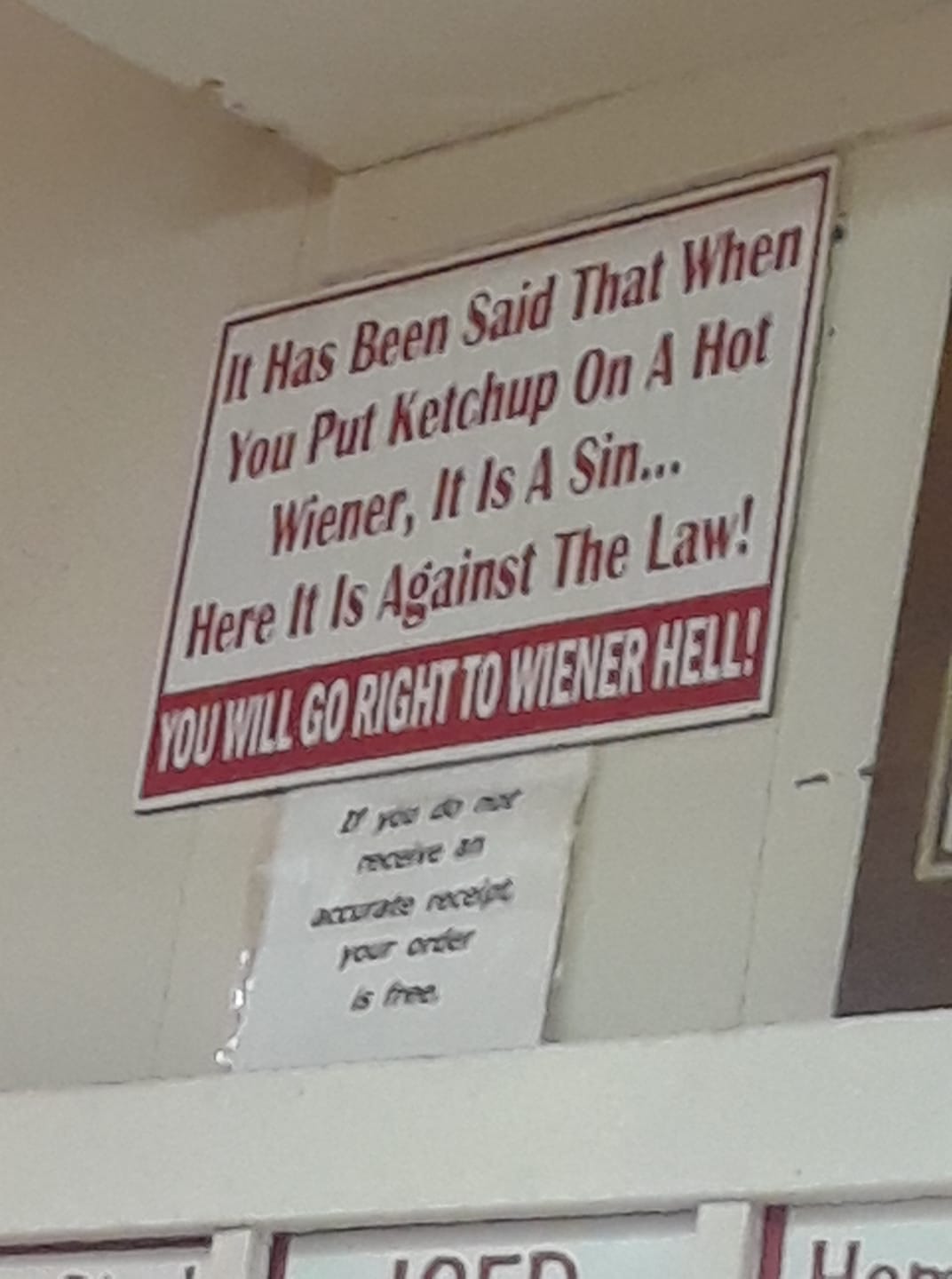
We all have heard that thing: don't you dare put ketchup on a hot dog in Chicago. So what do you put on a hot dog? A Chicago-style hot dog must be an all-beef wiener, ideally made by Vienna Beef, Red Hot Chicago, or Superdawg, set in a poppyseed bun, with the following ingredients in this order:
- yellow mustard
- relish (ideally Vienna Beef's special relish that practically glows in the dark)
- chopped raw onion
- sliced tomato
- dill pickle spear
- sport peppers (optional)
- celery salt
As much as I love Chicago, though, I just cannot bring myself to eat a Chicago-style dog. You see, I can't stand onions. Just one little tiny piece of onion is enough to ruin an entire plate for me (plus, it literally nauseates me - even grilled). I'm not a fan of tomato, either -- I mean, I can handle tomato, but just...not a lot of it: way too acidic for my taste buds. My ideal hot dog toppings are pretty simple: mustard, relish, and maybe some celery salt.
I have a confession, though: I'm a fourth-generation North Sider. My maternal grandparents grew up in Bucktown. Their parents immigrated to Chicago from Russia and Lithuania and settled on the near north side. My mother grew up in the same exact apartment in Bucktown where my grandmother was raised. And now I live on the north side (albeit not Bucktown - I'm not made of money!). But I confess I never heard of the no-ketchup rule until I read Cecil Adams' The Straight Dope column entitled "Why is there no ketchup on a properly made hot dog?" as it appeared in his third book, Return of The Straight Dope. The reader who asked the question said that it occurred to him that at his favorite hot dog stand, if he asked for a hot dog with everything, ketchup was not included. This hot dog stand was in...Montreal. And in Cecil's explanation, while he cites Chicago sources, he doesn't really indicate that this is a Chicago thing.
For eight years, I lived in New Jersey and as such made many, many trips into New York City. Nathan's also will not put ketchup on their hot dogs, as I found out. (Not that I would ever ask for ketchup on my hot dog - I'm not a monster.) Pink's in Los Angeles? No ketchup. I remember watching a show on Food Network that was about hot dogs, and it featured several different styles of hot dogs across the United States. At the end of the show, the narrator said something along the lines of, "While they make their hot dogs differently, they all agree on one thing: no ketchup."
But why not ketchup? First, there's a possible logistical reason: assuming you have a hot dog "with everything," "all-dressed," or "dragged through the garden," your red hot will have tomato on it already, so the ketchup would be kind of redundant. But according to Cecil Adams' article, there's a scientific reason for not putting ketchup on an all-beef hot dog: the sugar content actually counteracts the flavor of the hot dog, while a good mustard will actually enhance it. Cecil goes so far as to say to avoid using a big-name brand such as French's, whose turmeric content also kills the hot dog's flavor (and I add that Heinz is also not a hot dog-friendly mustard, as its vinegar content is too high), and he suggests lesser-known brands such as Plochman's. And why do people put ketchup on their hot dogs in the first place? The belief is that it's a habit from early childhood, when parents would put ketchup on everything for their kids to make them eat less fussily.
Now, think back to what I said: ketchup and the wrong mustard can tarnish the flavor of an all-beef hot dog. That made me think: is it okay to put ketchup on a pork-based hot dog? My friend (and Pie Factory Podcast cohost) Jim said that his father, who hated all-beef hot dogs and loved pork-and-chicken hot dogs, said ketchup wasn't allowable on those either. But Jim asserts that specialty ketchups are okay on hot dogs. Apparently so does Gordon Ramsay: specifically at his Gordon Ramsay Burger location in Chicago, he introduced a special hot dog that was specifically made to accept ketchup -- albeit a very specific kind of ketchup you can only get at the restaurant. So I guess that particular combination is okay. (Personally I prefer brown mustard over yellow mustard, but....shhh! Don't tell anybody I said that!)
But the question remains: why is the "no ketchup" rule so attached to Chicago when it's a pretty common practice? I think it's because we're the loudest about it.
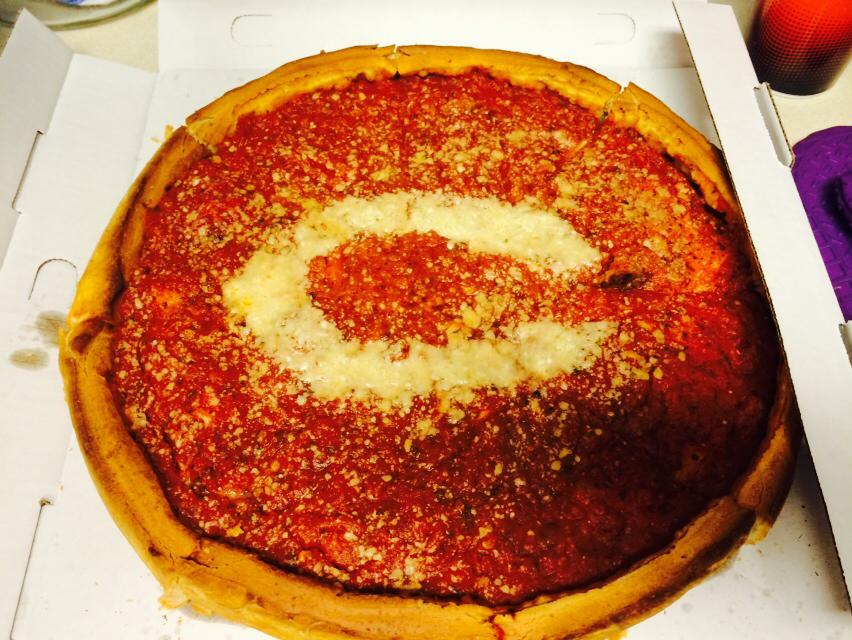
MYTH: Chicago-style pizza
Well, what about Chicago-style pizza? It's complicated.
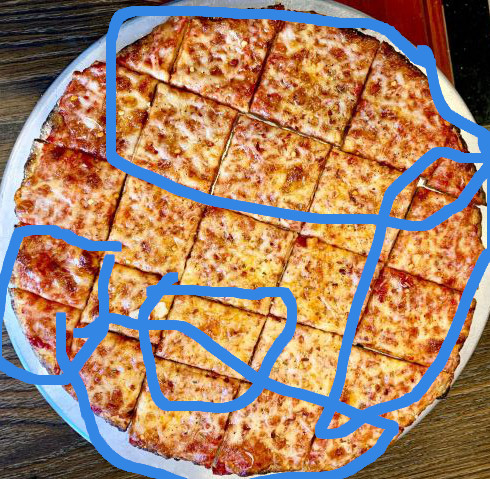
If your knowledge of Chicago pizza is limited to the jokes on the late night talk shows, you think deep dish. If you're a crotchety multigenerational blue-collar Chicagoan, you will scream bloody murder over the mere existence of the stuff and insist that deep dish is "tourist pizza" or "teenager pizza" and that "real" Chic
ago pizza is thin-crust pizza cut "tavern style" -- that is, rows and columns (or as some geometrically-challenged people say, "squares"). To you alleged Chicago pizza purists: what you are describing is New York pizza cut differently. That's all.
I gotta be honest. I was raised on the "tavern cut" pizza, and...I never liked it. It felt...unnatural. If you get an inner piece that has no crust on the edges, the entire layer of cheese comes right off on the first bite unless you hold it in place with your finger, getting it greasy to the point that it'll take you three days to get clean. As a child being served the stuff, I always wondered why we were eating pizza that way while everybody on TV was eating pizza that was cut in wedges; ahh, how glorious: bigger pieces, and you get a nice bit of crust with every slice!
Sacrilege? Maybe. Not long ago it was explained to me why this so-called "real" Chicago pizza is the way it is, and why it's called "tavern cut." It's been a rough day at work. You and your coworkers decide to stop at the bar for a beer and a pizza before heading home. The pizza arrives at the table cut in rows and columns. If you like crust, grab an outer piece; otherwise, have an inner piece. These are tiny pieces, too -- if you're really hungry, take two or three, or if you want pizza but don't want to spoil your appetite for dinner, just have one. So with tavern style, one pizza can satisfy multiple preferences in both quantity and crustity. (Oh, go away, red underscore -- "crustity" is a word!) I guess that makes sense.
But is deep dish really Chicago pizza? Well, it was invented here, reportedly by Ike Sewell at Pizzeria Uno on State Street downtown. And no, it's not a casserole; it's still a pizza, but with a thick crust and with the toppings piled high. Who says there can't be two Chicago style pizzas? We have two MLB teams and for a while we had two NFL teams, so why not two pizzas? Is it "tourist pizza"? I argue no. Plenty of natives eat it, and many mom-and-pop pizza joints in neighborhoods that aren't exactly tourist-heavy offer it up on their menus. And one of the area's biggest players in the deep dish -- Lou Malnati's -- started in Lincolnwood. Last I checked, Lincolnwood never exactly was a hotbed for tourism. The truth is that deep dish pizza is, honestly, special occasion pizza, not "tourist pizza" or "teenager pizza."
If you are indeed a tourist and are thinking of trying some Chicago deep dish, I'll give you some advice. It's generally agreed that Pizzeria Uno is the originator. Uno has a second location cater-corner away called PIzzeria Due. These are the only two Uno locations where you'll get the real thing -- Uno is now owned by a corporation outside of Boston who turned it into a chain, so you may see "Uno Chicago Grill" perhaps on the East Coast; you might get a good pie there, but if you want the honest-to-goodness real Pizzeria Uno pizza, you have to go to River North in downtown Chicago. And if you go to Uno or Due, you have to place your order before you are even seated because the pizza takes nearly an hour to bake, and they're made to order. Oh...and for the love of God, no matter how hungry you are, get the individual size: deep dish pizza is quite rich. One time when my wife and I were at Pizzeria Due, a couple from New York City was at a nearby table. They ordered a large pie because, well...that's what they always order in the Big Apple! When the server came out with the behemoth of a pie and plunked it down on the table, the look of horror on their faces was so precious! They each ate a slice. The server offered to box up the rest of the pizza, but the couple almost in perfect unison replied, "NO, NOOOOOOOO!!!"
But generally there are four major deep dish mongers in Chicago and the surrounding area: Pizzeria Uno, Giordano's, Gino's East, and Lou Malnati's. Uno and Giordano's use flour crust while Lou's and Gino's East pizzas have cornmeal-based crust. The Lou Malnati deep dish isn't nearly as deep as most deep dish; some locations offer a gluten-free crust that is literally a large piece of sausage. Giordano's crust has a buttery flavor. Many locals will recommend Pequod's. I recently tried it for the first time, but I wasn't thrilled with it -- the crust was quite spongy (bleh!), but I gotta say, the toppings were absolutely delicious.
Whether you're into tavern cut or deep dish, there's a Chicago pizza for you. Live and let live! All I know is on Valentine's day, my wife and I will be enjoying a nice heart-shaped deep dish from Giordano's.
MYTH: The nickname "Windy City" has nothing to do with weather.
I remember one day when I was working for a company that was headquartered in Los Angeles. It was a cold February day when I answered the phone when one of the two brothers who ran the company called. He asked how the weather was in Chicago. I said, "Well, the temperature is about ten below zero right now!" He replied, "WHOA! Below zero?! I've never heard of that! Ha! I guess that's why Chicago is called the 'Windy City,' huh?" I couldn't help but roll my eyes.
Many die-hard Chicagoans will tell you the real reason Chicago is called the "Windy City": it's a term started by Charles Dana to refer to politicians who wouldn't shut up. (That's the very short version of that.)
Except, uhmmm...that's wrong. Chicago's "Windy City" nickname literally is about the weather.
Remember that guy Cecil Adams and his column The Straight Dope I mentioned earlier in this writing? Well...he uncovered published references to Chicago as the "Windy City" that predate the Charles Dana usage of the nickname, circa 1890, specifically calling out braggarts about Chicago landing the upcoming 1893 World's Columbian Exposition. Cecil's article, "Why can’t Cecil get his facts straight about the origin of 'Big Apple' and mention John J. Fitz Gerald? And what about 'Windy City'?," discusses Barry Popik, who found references to Chicago as "the Windy City" as pertaining to weather, as far back as 1876.
And think about it: You see that big thing on all twenty-some miles of Chicago's eastern border? That, my friends, is called a...lake. It's a big one. A great one, in fact. It's sixty miles wide. When you have a body of water that large, you're gonna have wind! Heck, the late Steve Goodman even made reference to the pervailing wind off the lake in his classic "A Dying Cubs Fan's Last Request." And watch a Chicago Bears home game on TV: I can almost promise you the commentators will mention the wind off the lake as a potential issue. Folks, Chicago has wind. Literal wind. We do have our calm days, though. (If you want to guarantee it will be a windy day, simply put me on a bike.)
If you've made it this far, thank you for reading. I hope I gave you some helpful information about my favorite city on the planet.
Happy scrolling!