

Given that it's been three weeks since Midwest Gaming Classic and I'm still feeling the high from it, I figured: why not make a write-up about it the inaugural post?
I'm not 100% sure, but I think Midwest Gaming Classic (from here on referred to as "MGC") started in the early 2000s in the Milwaukee suburbs as a small gathering of Atari Jaguar fans called "Jagfest." It eventually grew into a gaming conference in general at a small hotel in Oconomowoc, then to a bigger hotel in Brookfield. I think it was 2018 when MGC outgrew the hotel -- which had to add large tents to accommodate the crowds and vendors (and April in Wisconsin can be cold!) -- and moved to the Wisconsin Center (now called Baird Center), where it's been since.
MGC is primarily a video game conference, but the "Gaming" part of its name has included board games, pinball, air hockey, and other things I'm sure I'm forgetting. (Last year I got a chess lesson at MGC courtesy of the Wisconsin Chess Association!) Around the conference you'll also see musical performances, professional wrestling, and cosplay galore. As with any convention of this sort, there are also panel discussions and vendors aplenty.
To say that MGC is huge would be a gross understatement. It gets bigger every year, and this year it ws just absolutely overwhelming! The show was spread over three floors of the massive convention center.
If I'm not mistaken, board gaming was on the first floor, along with MGC's own vendor space, an NES tournament, and a podcast recording space.
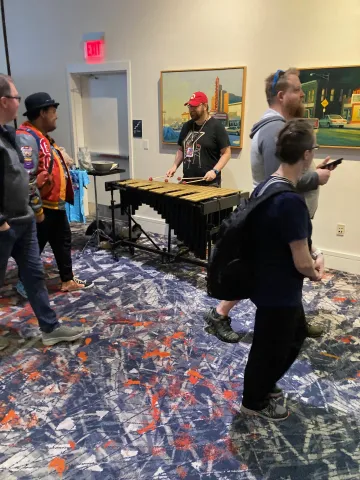
On the second floor were rooms occupied by various vendors, such as The Garcade of Menomonee Falls; Guys, Games & Beer; Bit Builders, and World of Nintendo; among others.
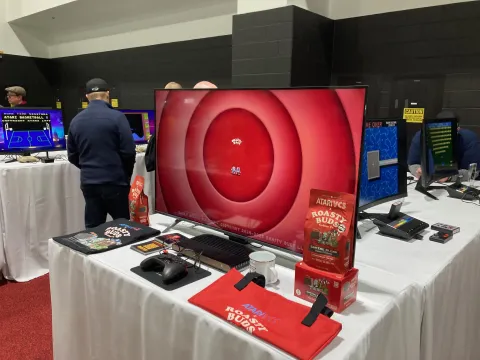
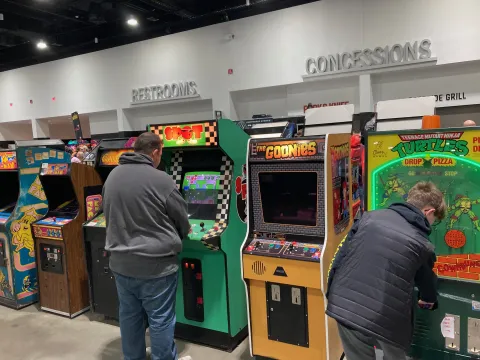
Up on the third floor was a large exhibition space called "Game Center," dedicated to video gaming and pinball: basically, if you wanted to actually play some video games, that was a good place to check out. There's a section toward the front called "Future Classics," where new games for various platforms, including tablets, cell phones, Switch, etc., are available for you to try out. Off to the right is the absolutely gigantic Classic Gaming and Computer Museum, which has out on display just about every home computer and gaming console you can possibly think of - you can play some classic games on many of them and even newer homebrews. Farther back is a selection of pinball machines, and even farther back are several rows of arcade video games from the '70s and later, most (if not all) available for sale. On the left side were various vendors and exhibitors, including Atari, who in my opinion have really started to shine again under its new ownership.
I usually spend quite a lot of time on the second floor. I love the selection of games The Garcade brings every year. Their room has some very familiar classics such as Sinistar, Class of '81 Reunion, and Centipede (many in cabaret-style cabinets!), but also some more obscure games such as Q*Bert's Qubes (one of my favorites!), Fix-It Felix Jr., and Baby Pac-Man, one of three pinball-video game hybrids I know of; sadly, the Baby Pac-Man machine was out of service the whole weekend -- understandable, because that's a very difficult machine to maintain. Last year my friend George, who works at The Garcade repairing machines, told me he yelled my name several times and I never acknowledged him, so I made sure I spent a lot of time in The Garcade's room -- but still didn't see him the entire weekend! While I was in The Garcade's room I became addicted to a game called Switch'n'Shoot, a simple space shooter in which your ship continuously moves in one direction across the screen and wraps. The control panel consists of exactly one button: hit it to start the game, and while the game is in play, the button causes your ship to change directions and shoot at the same time. You get one life, and that's it. There are powerups you can grab that will enhance your fire power in various ways. Only did I find out later that the game was actually released as a home video game in 2006!
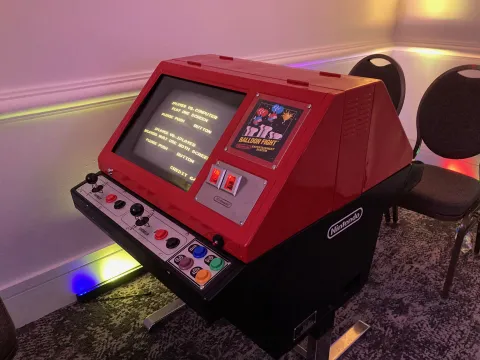
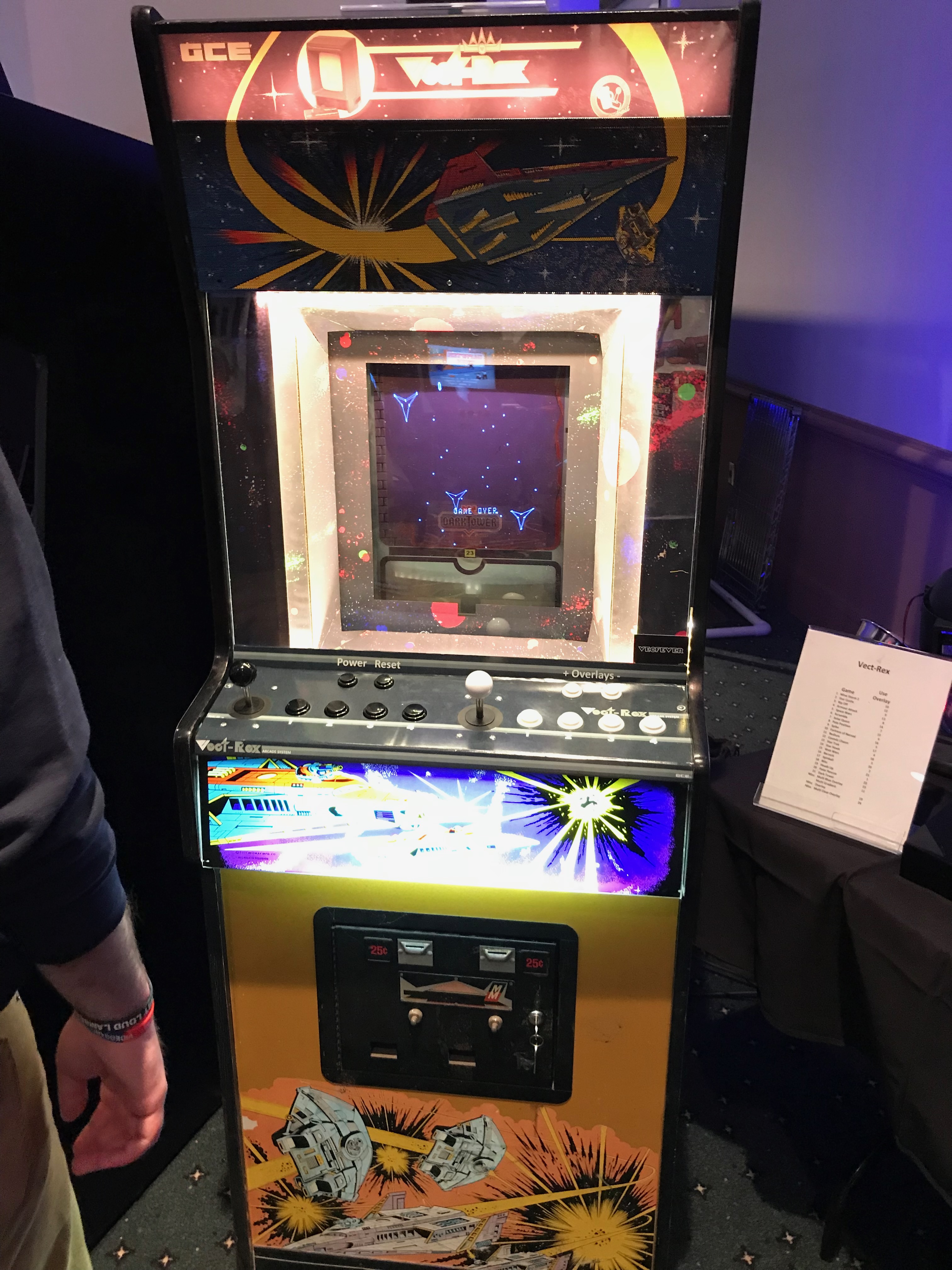
Also on the second floor is one of my favorite rooms to visit, Guys, Games and Beer. Despite the name, there are actually women involved as well, but GGB has quite a huge operation. In their room are console and computer video games of all types: multiple Vectrex consoles, a section of light gun games, a section of Japanese games, Atari's consoles, ColecoVision, Intellivision, Sega Mastersystem and Genesis, NES, VirtualBoy, and several others I'm sure I'm failing to mention. There's also a group of iMacs LANned together to play Quake.
I believe GGB is based out of Racine, Wisconsin, and there are two things they take very seriously: beer (one of the elements of their online show is called "Beer Court," in which they rate a beer), and independent video game developers -- so if you're an indy game developer, reach out to GGB: they'll want to talk to you! And they are a very hospitable bunch. Their biggest concern about people visiting their room at MGC: that people have a good time.
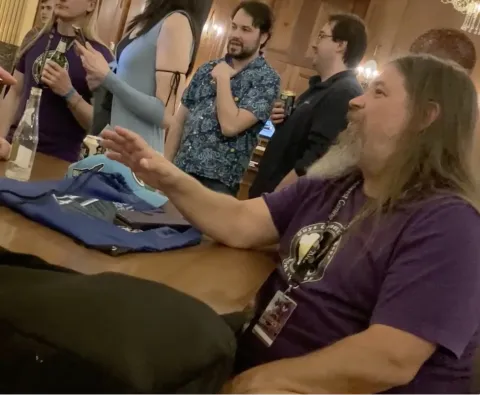
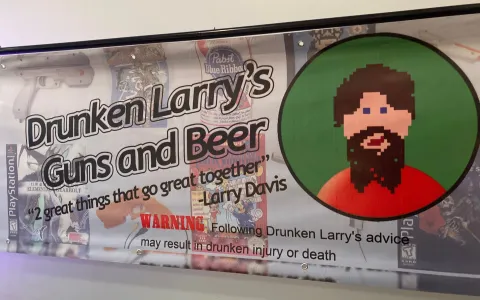
Among the GGB crew ("Gutter Geeks") are Tom Dunk and his son Travis; Brian Koenig, a professional musician who teaches guitar, who seemingly never stops playing his guitar during the show (and plays lead guitar on GGB's theme music); and "Drunken Larry" Davis, who is...quite simply a trip! (and plays bass on GGB's theme music); sadly, I don't know the names of the other folks in the crew, but trust me: they're a friendly bunch. Historically on Saturday night at MGC they'd have a post-party in their room (which would include several rounds of Werewolf, a party game based on Mafia), but this year I think Baird Center staff were hellbent on everybody vacating the place at 9pm, so they had their post-party at the lounge at the Hilton attached to the Baird Center. I went to that post-party, but didn't stay long; I kind of felt like a third wheel, despite the always-friendly hospitality of the Gutter Geeks.
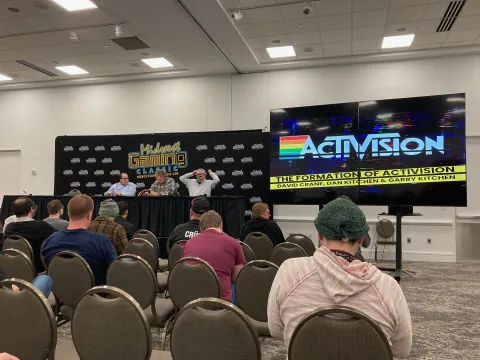
Also on Saturday night I attended a talk given by Activision founders Dan and Garry Kitchen and David Crane. The three developed some landmark games for Atari 2600 such as Pitfall! and Keystone Kapers, and they've been in game development since. In recent years they've returned to making new games for the Atari 2600 as a new company called Audacity Games. They had great stories to tell about their days at Activision and had a brief Q&A afterwards. I asked if having their names on the games led to other companies trying to poach them -- allegedly a reason many video game companies refused to credit their developers. They said they never had an issue with it. Another attendee asked Garry Kitchen about his feelings of the long-debunked rumor that Coleco wanted him to dumb down the Atari 2600 version of Donkey Kong to make the ColecoVision version look that much better. Despite probably repeatedly being asked about that, Garry seemed genuinely amused. He pointed out a few pretty important things about developing the 2600 Donkey Kong as an independent contractor: 1) he didn't have to intentionally make the game very underwhelming when compared to the ColecoVision version due to the system limitations of the 2600; 2) the day he was assigned to do Donkey Kong, there were 90 days before its scheduled release date; 3) he was the lone developer - they didn't have development teams, QA departments, graphic artists, etc. - he had to do it all himself; 4) he did tell Coleco he could make a better version of the game if they were to give him an 8k ROM instead of 4k and allow him two extra months, but Coleco came back with "8k will make the game cost more, and we'll miss the Christmas shopping season"; 5) it wouldn't make any sense to intentionally make a bad product, what with all the expense involved; and 6) whatever one may think of the 2600 Donkey Kong, its sales accounted for 20% of Coleco's companywide profits that year. Just that one game. Later on I had the guys autograph a few Atari 2600 game boxes for me. They're thinking about launching a podcast in the near future.
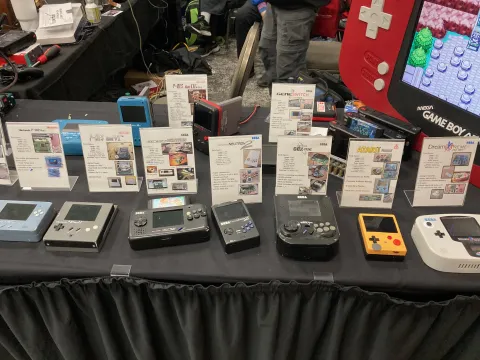
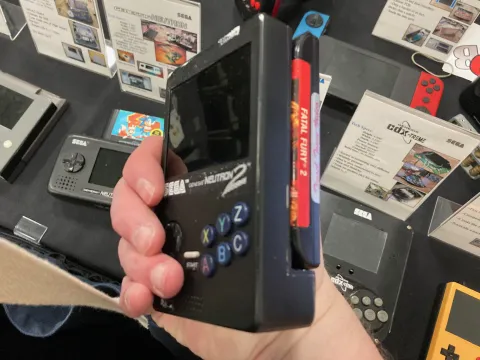
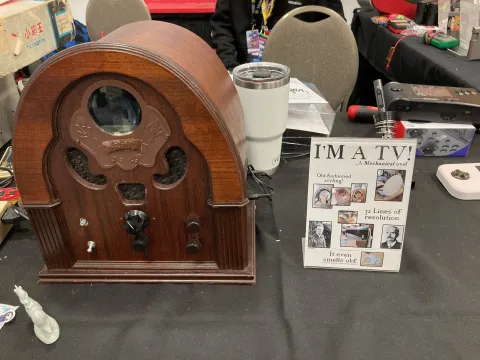
Also on the second floor was the BitBuilt Experience, who displayed mainly a bunch of classic video game consoles that were hacked into handhelds. Also in their room was an old-timey radio shell that housed a mechanical television! I don't remember the explanation of how it works, but I do remember that the explanation set off a red flag: if I looked at it, I'd probably get a headache. Still an interesting concept, though.
Perhaps the two (literally) biggest attractions were on the third floor: the Game Center, which was gigantic, and the vendor hall, which somehow made the Game Center look tiny (believe me, it was not!). Pretty sure I took several trips through both spaces on Saturday and Sunday.
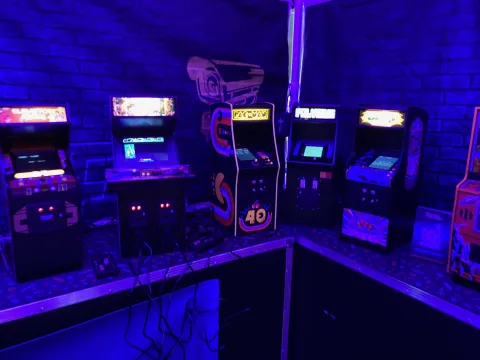
One of the exhibitors in the Game Center was Quarter Arcades, who were offering their...well, quarter-sized arcade cabinets...for sale. Those things were really cool: indeed, they were 25%-sized replicas of arcade machines, complete with the gameplay and the sound quality of a full-sized cabinet! They also had some mini replica soda machines -- actually just USB hubs in disguise. But among the quarter-size cabinets was one of the mythical Polybius game, but I'm guessing that too is a USB hub because the joystick and buttons on the control panel literally didn't do anything: they were frozen in place. But I could have easily found myself tempted to buy one of those machines if I had the money (I think they retail for about $200, which I'm not really in a position to spend at the moment) and the space (I traveled via AmTrak and was physically limited in terms of what I could bring home).
On Sunday, Roman's Coliseum (run by a realtor named, of course, Roman) held two Atari 2600 mini-tournaments. The first was with the Parker Bros. version of Frogger - specifically, be the fastest to get three frogs into their home bases; and the second was to be the fastest to clear a Pac-Man board. I wore my special Pac-Man tie-dye just for this competition. Rather than an actual Atari 2600, a Retron 77 system was used for the competition, and it was connected to two monitors: a small one that was right in front of the player, and a large HDTV so that spectators could watch. It was weird - with Frogger, the large TV couldn't display the Frogger character except under various specific circumstances! I ended up winning that mini-tournament, and afterwards I was escorted to the first floor to claim my prize, which was...any T-shirt of my choosing from the MGC vendor space. Because I won, I decided not to compete in the Pac-Man tournament: I figured I should give someone else a chance.
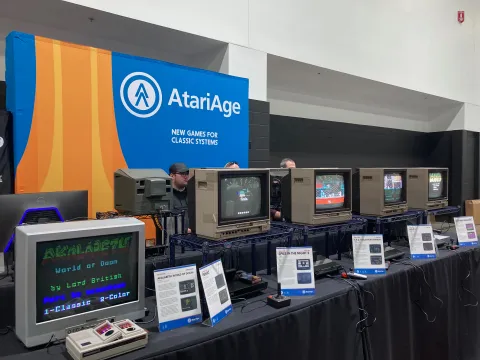
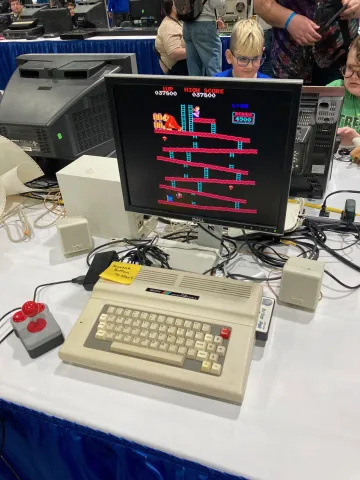
One of my favorite things to check out in the Game Center is the Classic Gaming and Computing Museum, featuring countless rows of old (and not so old) computers and video game consoles available to play with a selection of games. Given my affinity for the Amiga platform, I had to seek out the Amiga 500 that I usually see, and much to my delight, it was there again this year, this time playing the 1989 scifi air hockey game Shufflepuck Café. As is my MGC tradition, I had to check out AtariAge forum user Thanatos' Tandy Color Computer running the arcade Donkey Kong ROM -- yep, playing the actual arcade game on an 8-bit home computer! I'm not a big fan of Donkey Kong (or most Nintendo products, for that matter), but I always have to get one game in and catch up with Thanatos offline. This year in the Museum I was introduced to a newish retro-arcade-style platformer on the Atari VCS (that is, Atari's latest console, not the Video Computer System, aka 2600) called Donut Dodo.
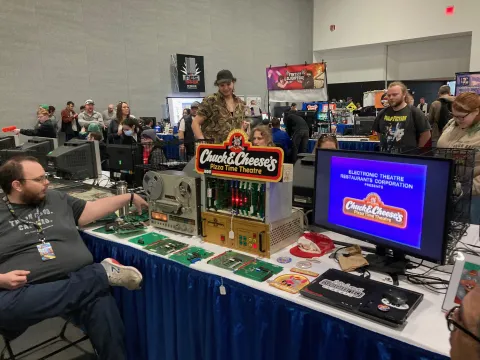
Aside from computers and consoles, Classic Gaming and Computing Museum has other items on display. For example, this year I saw what appeared to be the tape deck and mechanisms that powered the animatronics at a Chuck E. Cheese. (I could have asked, but my social anxiety suddenly kicked in.) In past years (and possibly this year!) I've also seen a display that traces the evolution of the computer cartridge, a pack of cigarettes that was a tie-in to market Atari's 1990 video game Klax, an unopened box containing the Atari Remote Video Computer System, and a pedal-operated video playing device called "Stooge O Matic" (which I was never able to figure out, despite following the instructions).
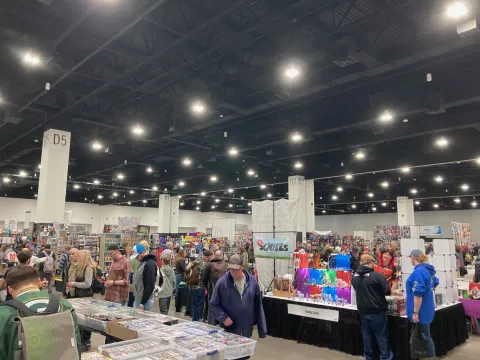
Of course, possibly the biggest attraction at MGC is the mammoth Vendor Hall. Words and pictures cannot accurately convey just how huge the space was. It was quite...overwhelming. Rows and rows of tables and booths farther than the sharpest eye could possibly see. So many of the vendors are artists that the rows off to the right are 100% dedicated to artists offering their works for sale. The rest of the Vendor Hall - well, primarily video games, consoles, and related paraphernalia. Do you want to have a marquee from your favorite arcade classic to frame on your wall? Chances are you'll find it in the Vendor Hall. Are you in the market for a vinyl copy of the soundtrack from one of your favorite newer video games? Check the Vendor Hall - it's probably there! Is your old GameCube in need of a replacement controller? Yep - look in the Vendor Hall! Want a copy of the wildly popular Atari 2600 game Adventure? Well...uhh...yeah, good luck finding that in the Vendor Hall because despite the untold millions of copies that game sold, vendors have created artificial scarcity out of it thanks to Ready Player One. But just about anything else video game related, chances are you'll find it in the Vendor Hall. (Well...okay, for some reason I was unable to find a replacement Atari CX-40 for my friend and Pie Factory Podcast cohost Jim. But anything else, you will likely find it in the Vendor Hall!)
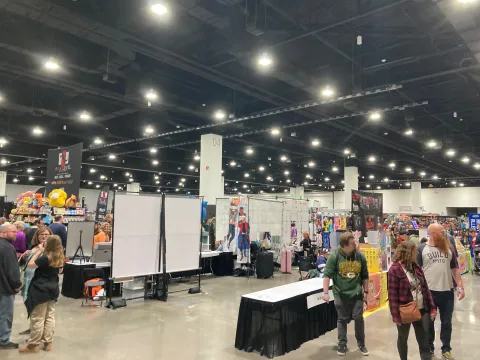
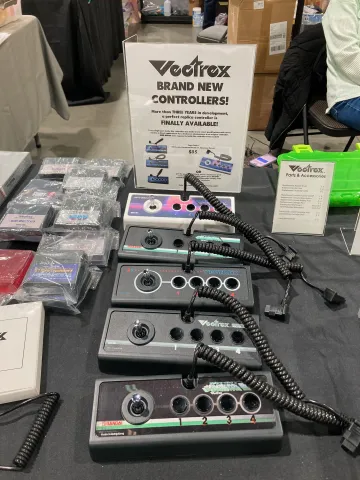
Seriously, though, the Vendor Hall was huge. Insanely huge. I had to make multiple trips just to see the whole thing and make sure I didn't miss anything. Truth is, I really didn't want to buy anything in particular, except maybe a few Vectrex overlays -- and I did just that at Videogames Then & Now's space. If you're in the Chicago area and need games for just about any conceivable video game console, you need to visit Videogames Then & Now, Sean Kelly's store, in Harwood Heights. He's in a space formerly occupied by a Blockbuster Video, and in fact Sean even uses some of the old Blockbuster décor to organize his collection. I think if he has one specialty, it's the Vectrex vector gaming console. He offers reproduction overlays for sale -- perfect for me because I play my Vectrex games off a multicart. Oh...speaking of multicarts, he also offers Vectrex multicarts, which contain every known Vectrex ROM (including some homebrews), and he also offers a "hacked" version, which is basically the same as his regular multicart but the games are hacked so that you can have unlimited lives and other tweaks. Need a carrying case for your Vectrex? Sean has 'em! This year at his table were a gorgeous set of Vectrex controllers. I told him that if I hadn't recently lost my job, I'd walk away with at least one of 'em. He told me, "Well, when you do get back to work, come talk to me -- they'll still be available!" Next year Sean hopes to have his version of the 3-D imager ready for next year's show.
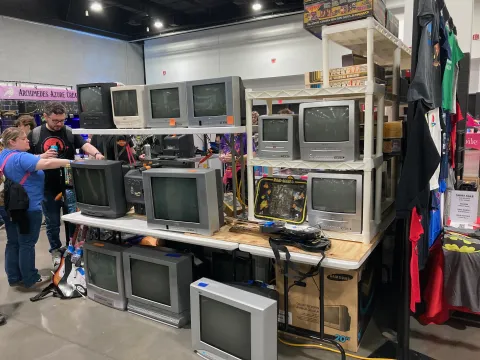
Do you have a vintage console and would much rather you play it on an old-school cathode ray tube TV than on a modern HDTV? For at least the last two years, one of the vendors had CRT TV sets available for purchase and would even offer to help you put it in your car. Why more vendors don't do that I'll never know -- many retro gamers firmly believe that those games are meant to play on tube sets. (Also, light gun games won't work on modern units.) So let this be a lesson: if you have an old Trinitron that you don't use, find yourself a retro gamer and you'll probably be able to sell that thing for a nice price.
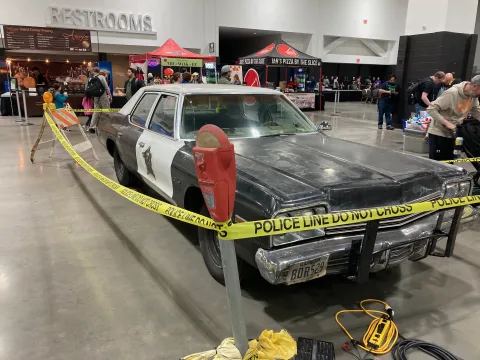
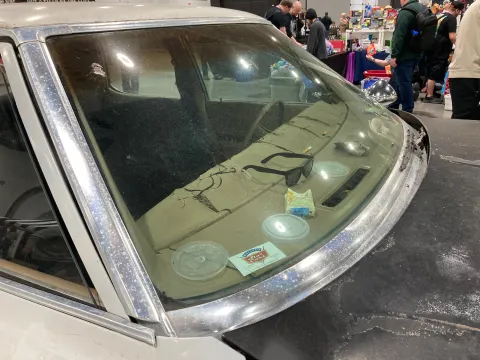
Also in the vendor hall, you'll also see reproductions of famous cars. This year (and prior years) you could check out Garth Algar's car. Quite often they have an Ectomobile (and in fact one year Ernie Hudson was a special guest and posed for pictures with the car!). And this year, courtesy of Wisconsin Star Cars, there was a 1974 Dodge Monaco decked out like a Bluesmobile, complete with a Chesterfield pack on the dashboard and an accurate license plate! In the far corner of the Vendor Hall was a stage set up for...professional wrestling. Not my thing, but I know it's popular in the gaming community. Way in the back of the Vendor Hall were a handful of food and drink vendors, most definitely provided by the Baird Center itself. All I can say is...last year I grew quite thirsty, and after seeing the lowest price for a drink from all of the vendors, I opted to remain thirsty. (There's a reason that the folks at MGC recommend going to the Third Street Market a couple of blocks away! I went there, but it was very crowded.) In the entrance of the Vendor Hall, you could meet Garry and Dan Kitchen and David Crane, formerly of Activision and now of Audacity Games. At their table you could try and buy their new games, get your memorabilia signed, or just plain have a nice chat with the guys.
Even in the hallways outside of the rooms there was stuff going on. In the hallway outside of the Vendor Hall and Game Center were tables of famed gaming artists, signing and selling their works. Jeff Lee, formerly of Gottlieb and graphic artist responsible for the design of Q*Bert, was there as he usually is, selling pictures and also demoing a new game he's been involved with that does bear somewhat of a resemblance from his timeless classic. The game is called X%pert, and your character needs to line up sets of tiles that match in color; as the levels progress, more enemies will be introduced who mess up your work, and you'll of course need to fix it! The company that he and several of his ex-coworkers from Gottlieb are working together as is called Ratslym -- which, when spelled backwards, is Mylstar, the name of the company that Gottlieb evolved into. (Well played, Lemon!)
My descriptions and pictures cannot possibly do justice for what Midwest Gaming Classic has become over the years. A friend of mine who attended for the first time this year but has been to Portland Retro Gaming Expo several times told me that MGC actually seems much bigger -- and Portland always had the reputation of being the biggest gaming show! I used to go to MGC as a vendor to promote Pie Factory Podcast, which was fun, but it was also a lot of work, and also I didn't have as much of a chance to experience the whole show. (Plus, it's expensive to get a vendor space!) When we eschewed the idea of just...going to the show for fun and not promoting the podcast, it really opened up a lot of opportunity for enjoyment.
It also made my travel options a bit better. Used to be that I'd load up our crossover vehicle with a card table, a couple of chairs, boxes of random stuff, microphones, and who knows what else. If my wife needed the car, I'd rent one. But now going as just an everyday schnook, that actually opens up the possibility of taking AmTrak -- which is what I've done the last few times. The trip is cheap enough, and the Baird Center and attached hotels are just a short walk from the (insultingly dinky) Milwaukee Intermodal Station. And honestly, the more I visit Milwaukee, the more I like it, despite the, well...deadness...of downtown Milwaukee. But there's a certain charm there that makes me want to explore more of the city -- indeed, word is that all the cool places are in the neighborhoods. Regardless, Midwest Gaming Classic has always delivered on a great time, and 2025 was no exception; just bigger than ever, that's all.
Image
| Image
|
Image
| Image
|
Image
| Image
|
Image
| Image
|
Image
| Image
|
Image
| Image
|